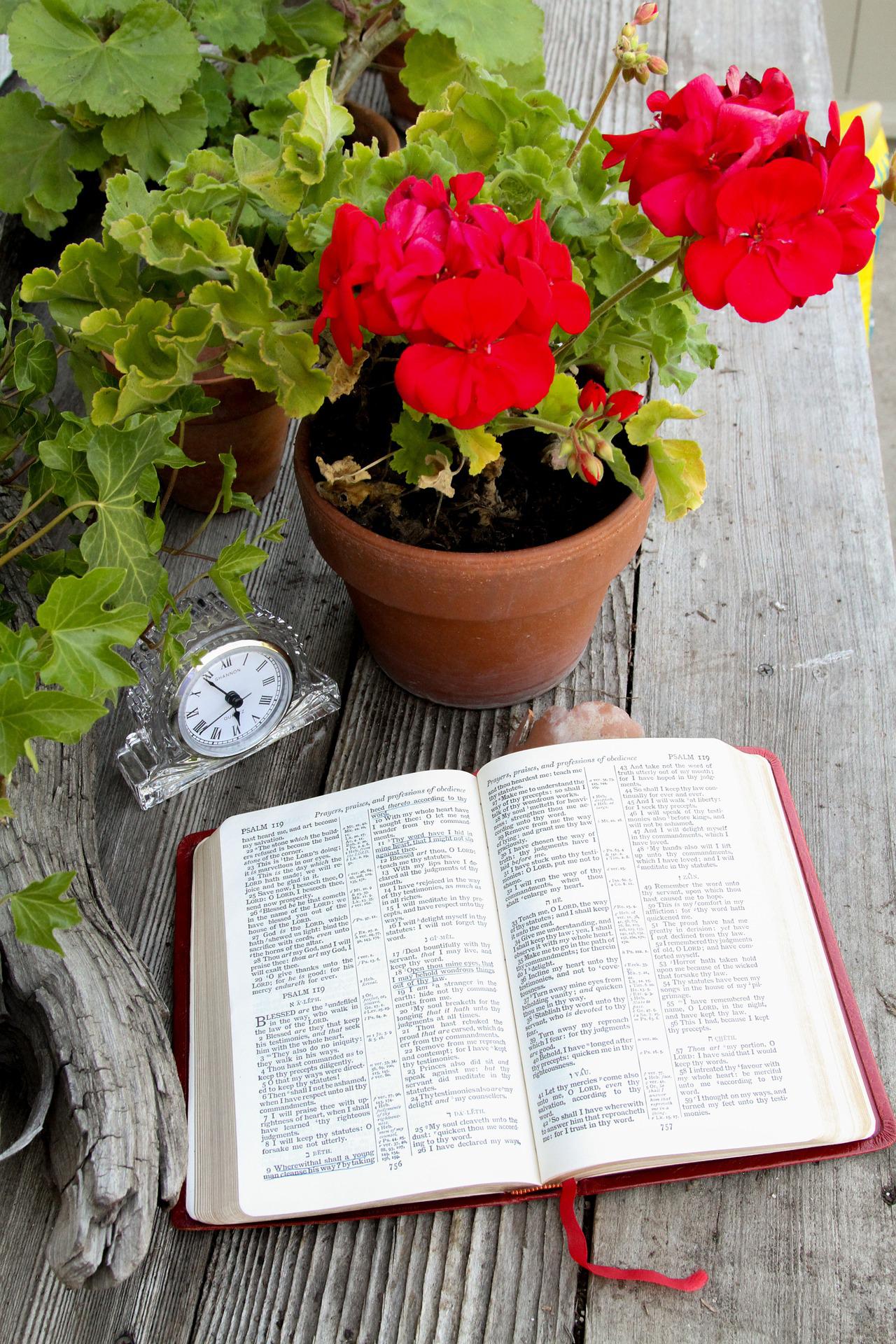

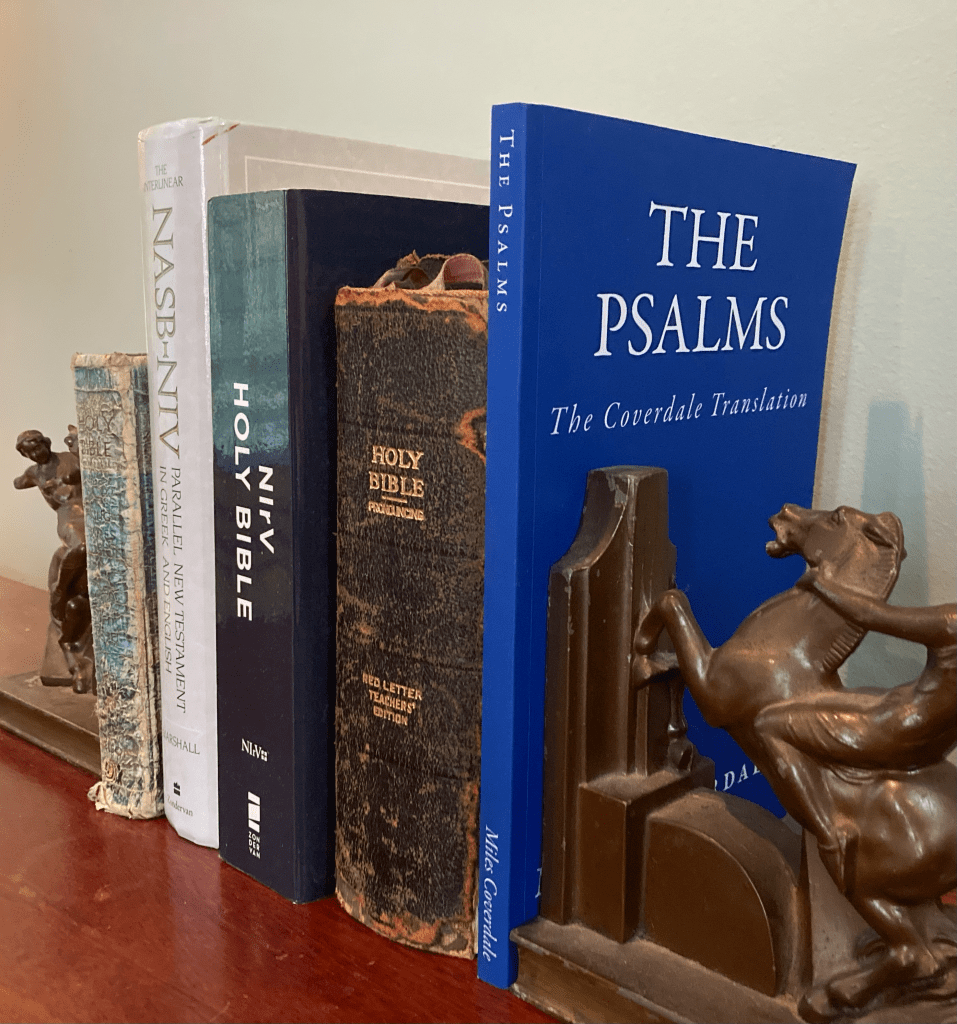
Thy statutes have been my songs in the house of my pilgrimage. Psalm 119:54 (Coverdale)
If loving Bible study makes me a nerd, then I don’t wanna be cool.
For nerds like me, even the study of different Bible translations is fascinating. Certainly the Bible should be studied from a religious perspective. It’s also valuable for its historical significance and its unparalleled influence on philosophy, art, and literature. Furthermore, it is a literary masterpiece in its own right.
For example, surely Mary’s song of praise in Luke 1:36-55 is one of the most lovely passages in the Bible. Sometimes referred to as “The Magnificat,” it has often been set to music. In high school I was privileged to sing a choral version of “The Magnificat” written by Herbert Howells, and it has since been one of my very favorite pieces of music. Ever. I’ve linked it below and encourage you to give it a listen.
Only recently did I realize that the words for Howell’s version are taken from the Coverdale Bible. Have you ever heard of that one? Published in 1535, it was the first complete printed Bible in English, based partially on the translation that Tyndale was not able to finish, and supplemented by Coverdale’s translation of the rest from Latin and German translations. This Bible preceded the King James Authorized version by more than 75 years and was likely the Bible that Shakespeare would have known.
Although in recent years I have developed a greater appreciation for modern translations in some circumstances, I grew up on the King James Version and have a great affection for it. But for many years now our school has used Coverdale’s version of the Psalms for our daily chapel readings. I must say it has a beauty all its own.
Psalm 84:5-6
Blessed is the man whose strength is in thee, in whose heart are thy ways, who going through the vale of misery use it for a well.
There’s nothing wrong with how newer versions translate that passage, but the Coverdale rendering is very simple, elegant, and moving.
There’s nothing wrong with other translations of Psalm 93:1-2 either. The Coverdale is different and yet still means the same.
The Lord is king, and hath put on glorious apparel; the Lord hath put on his apparel, and girded himself with strength. He hath made the round world so sure that it cannot be moved. Ever since the world began hath thy seat been prepared; thou art from everlasting.
I also love the way the Coverdale renders Psalm 130. Notice here verses 1-3:
Out of the deep have I called unto thee, O Lord; Lord, hear my voice. O let thine ears consider well the voice of my complaint. If thou, Lord, wilt be extreme to mark what is done amiss, O lord, who may abide it?
There’s also a beautiful choral adaptation of this psalm in John Rutter’s Requiem. It is also linked below. Again, it’s some of the most beautiful music I’ve ever heard.
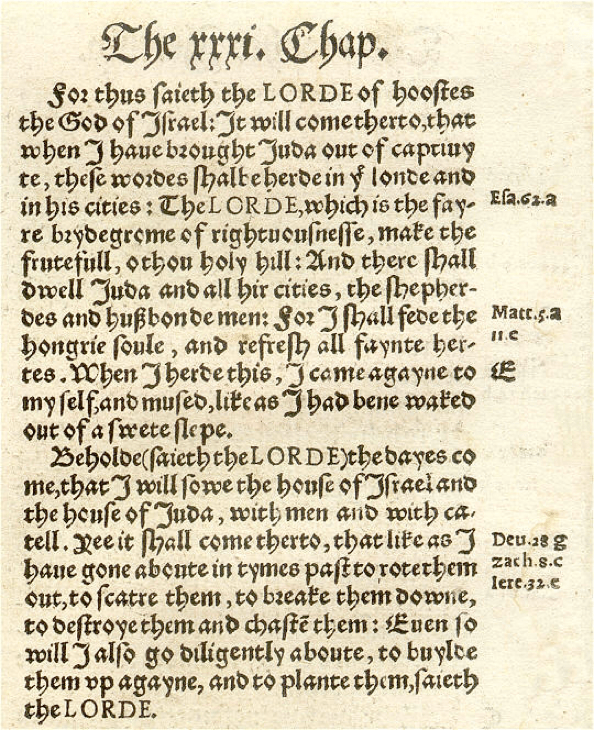
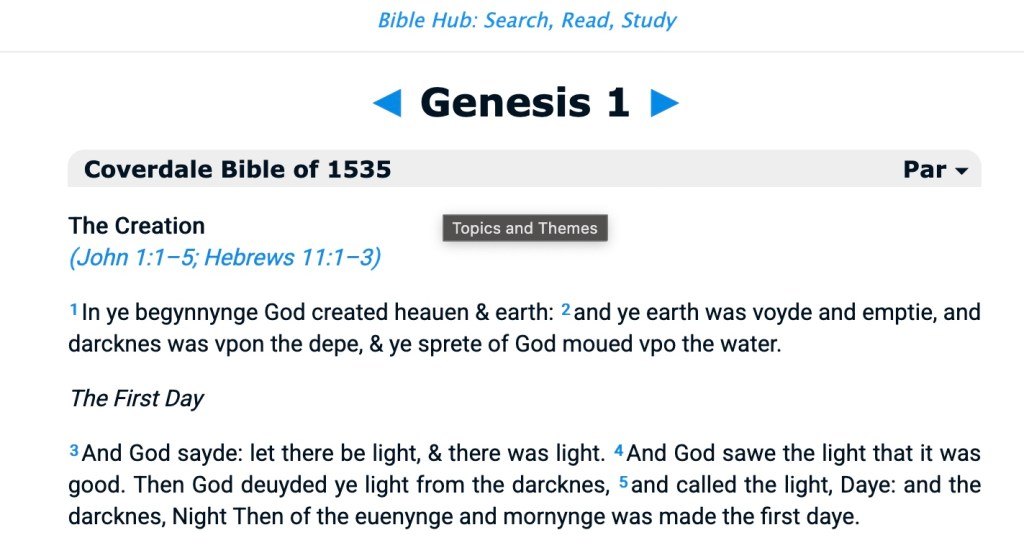
The Coverdale Bible is classified as an early modern translation, and indeed the original spellings look more like Middle English (somewhere between Chaucer and the KJV). Our Coverdale Psalters at school use modern spelling so I rarely have any trouble understanding it. It doesn’t usually appear on Bible translation apps or websites, but you can find it (with the Middle English spellings) at biblehub.com/coverdale.
If you love the Bible, if you love literature, and if you have interest in the history of Bible translations, the Coverdale translation is one to check out. The internet makes it easier than ever to nerd out over these things, which, trust me, is perfectly fine. 🤓
Yes, in some ways, newer translations are needed to provide understanding, especially for those who didn’t grow up in church. But isn’t it interesting to go back to one of the oldest English Bibles and enjoy its elegance?
And on that note, I do hope some of you will have time to listen to these songs. Modern styles of music have their place as well, but if we ignore traditional styles, we miss out on a lot of beauty.
by Christie Cole Atkins
Dear God, truly Your word is living and powerful. It is beautifully rich and profoundly moving. We thank You for revealing it through Your Holy Spirit, for preserving it through the centuries, and for making it so accessible in our day. Help us to take advantage of every opportunity to dwell upon its beauty, not just the beauty of its language, but of the life-giving wisdom it contains. In Jesus’s name, Amen.
Related Reading: Lost In Translation
 Walk Worthy