
For you are all sons and daughters of God through faith in Christ Jesus. For all of you who were baptized into Christ have clothed yourselves with Christ. There is neither Jew nor Greek, there is neither slave nor free, there is neither male nor female; for you are all one in Christ Jesus. Galatians 3:26-28 NASB
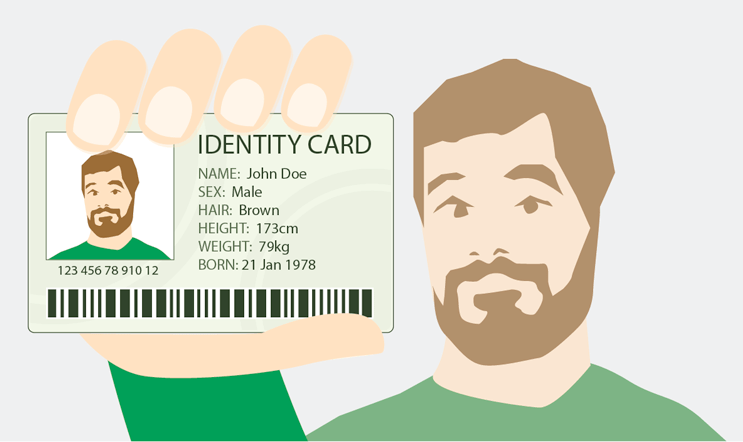
Identity is a big buzz word in society today. There are the politics of identity that focus on gender, race, sexual orientation. There is big concern over identity theft. We sometimes feel our identity is reduced to something as impersonal as a number, like our social security number. For women, identity is usually very much tied up in our relationships; for men their work is usually the quickest identifier.
Sometimes our identity comes to be based on mistakes we’ve made in the past. We label others and they label us, and those labels “stick” in our minds. Is there anything about the way you identify yourself, or the way you feel others identify you, that you wish you could change? One identity marker that applies to all of us is the word “sinner.” But Jesus came to change that identity from sinner to saved. Let’s look at how Jesus re-defined the identity of several women we read about in Luke chapters 7-8.
In 7:11-15 Jesus and his disciples come upon a widow who is burying her only son. In ancient times this would have been a very bad situation for a woman. How would she provide for herself? Jesus brings the widow’s son back to life, changing her identity from a destitute widow to a mother who would be provided for.
In 7:36-50 a woman known as a sinner anoints Jesus’s feet in front of his host and all the other guests. Jesus tells a parable to correct the host’s unspoken condemnation of the situation. Then Jesus pronounces this sinner as “forgiven” and acknowledges her as a “woman” created in the image of God. Even when no one else can, Jesus is able to see beneath our sins to our fundamental identity; beyond our sins to our potential.
In 8:1-3 Mary Magdalene, out of whom Jesus had previously cast seven demons, is identified as a companion of Jesus.
In 8:19-21 Jesus says that he identifies “these who hear the word of God and do it” as his mother and brothers. It seems that our identity in our physical family, while important, isn’t always what defines us. What matters even more is what spiritual family we are identified with.
Finally in 8:41-56 we have a story within a story. While on his way to heal the 12-year-old daughter of a ruler of the synagogue, Jesus encounters a woman with some kind of flow of blood. She had been in this condition, coincidentally, for 12 years, and she would have been considered unclean all that time and not allowed to come to the temple to worship. When Jesus heals her, she goes from being an unclean outcast to being called a “daughter.” In the meantime, the daughter of the religious leader has died, but Jesus goes to the man’s house and raises her from the dead. Jesus communicates his care and concern for each individual regardless of how society identifies them. Both of these ladies are indeed daughters.

So how do you identify yourself? What labels are attached to you? The world may identify us based on exterior markers or on the things we’ve done. But God identifies us at the very deepest level. And if a widow, a woman of ill-repute, and an unclean outcast were just as important to Jesus as the daughter of a temple official, then you are also just as important to him as anyone else.
There are a lot of things we cannot change. But we CAN change the one thing that matters most, and until we do that, we will not be truly happy with who we are. When we become a part of God’s spiritual family, the church, we go from being lost to found, from being a sinner to being saved. Finding our identity in Christ, we can be and become who we were created to be.
Then he said to the woman, “Your faith has saved you. Go in peace.” Luke 7:50
Dear God, I thank You that no matter what labels the world may put on me, and no matter how many things I wish I could change, You have provided a way to change what counts most. Help me to find my identity first and foremost in Christ, knowing that I have value because You love me. In Jesus’s name, Amen.
by Christie Cole Atkins
 Walk Worthy